
International Day of Climate Action: Understanding Product Impact Through Life Cycle Assessments and Product Carbon Footprints

26 Oct
2026


As the need for collective action on climate change continues to grow, companies across the globe are expected to understand not only their direct emissions, but also the impacts occurring throughout their value chains. This is particularly relevant in healthcare, where supply chain-related emissions, including those associated with purchased goods and services, often represent the largest share of an organisation’s greenhouse gas (GHG) emissions.1


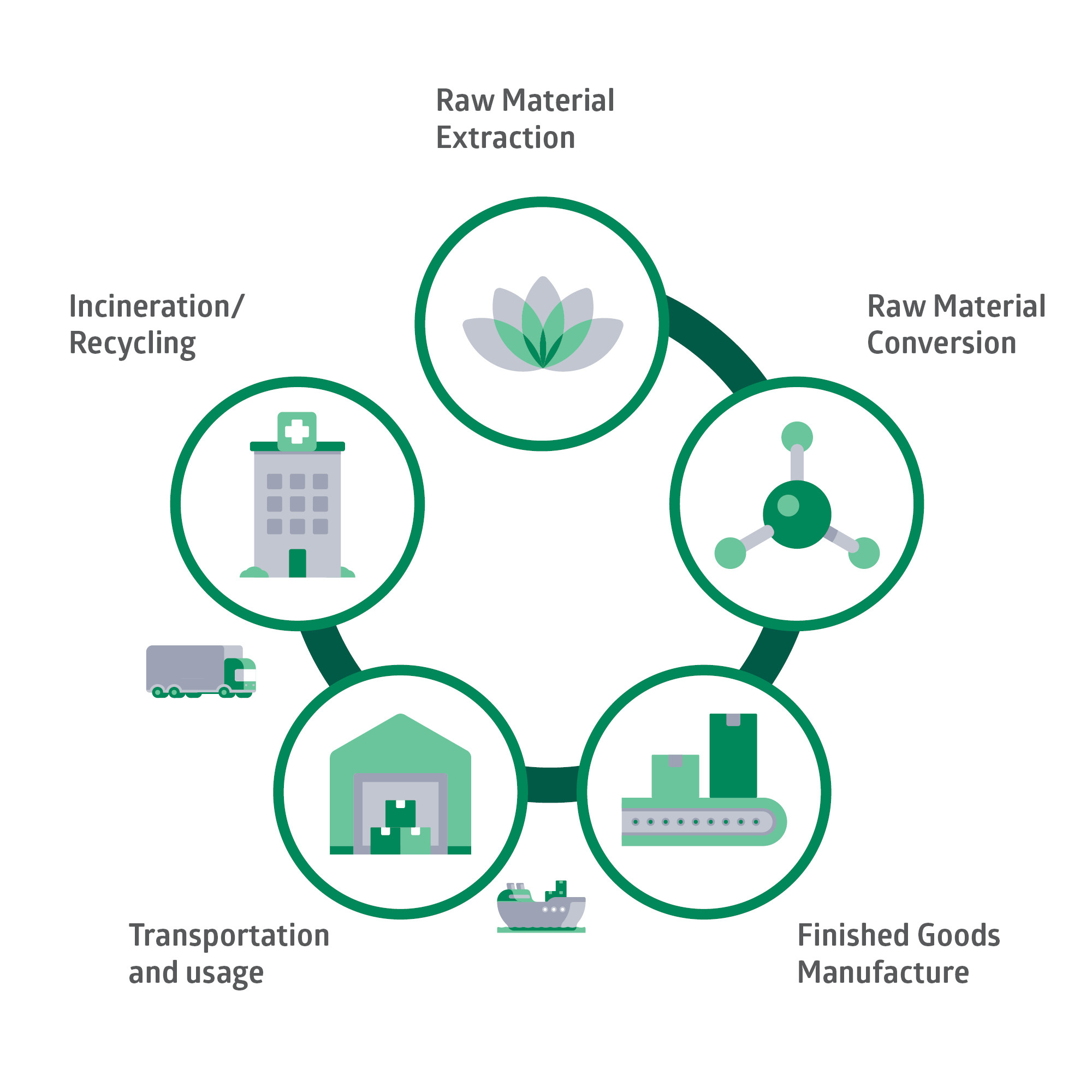
On International Day of Climate Action, attention is focused on the actions needed to support a lower-carbon intensive future. At Medline, one way we contribute to this effort is by expanding our understanding of product-level environmental impacts through Life Cycle Assessments (LCAs) and Product Carbon Footprints (PCFs). These methodologies help quantify environmental impacts across a product’s lifecycle, from raw material extraction and manufacturing to transportation and end-of-life treatment. They also enable us to respond to increasing customer demand for environmental transparency, sustainability reporting, and more comprehensive calculations of indirect Scope 3 GHG emissions.
Building Product-Level Environmental Insights


As healthcare providers develop climate strategies and sustainability goals, access to reliable environmental data is becoming increasingly fundamental. While many organisations currently use spend-based approaches to estimate Scope 3 emissions, product-specific assessments can provide additional insights into where impacts occur and where opportunities for improvement may exist. This can help organisations focus their efforts where they can have a meaningful outcome.


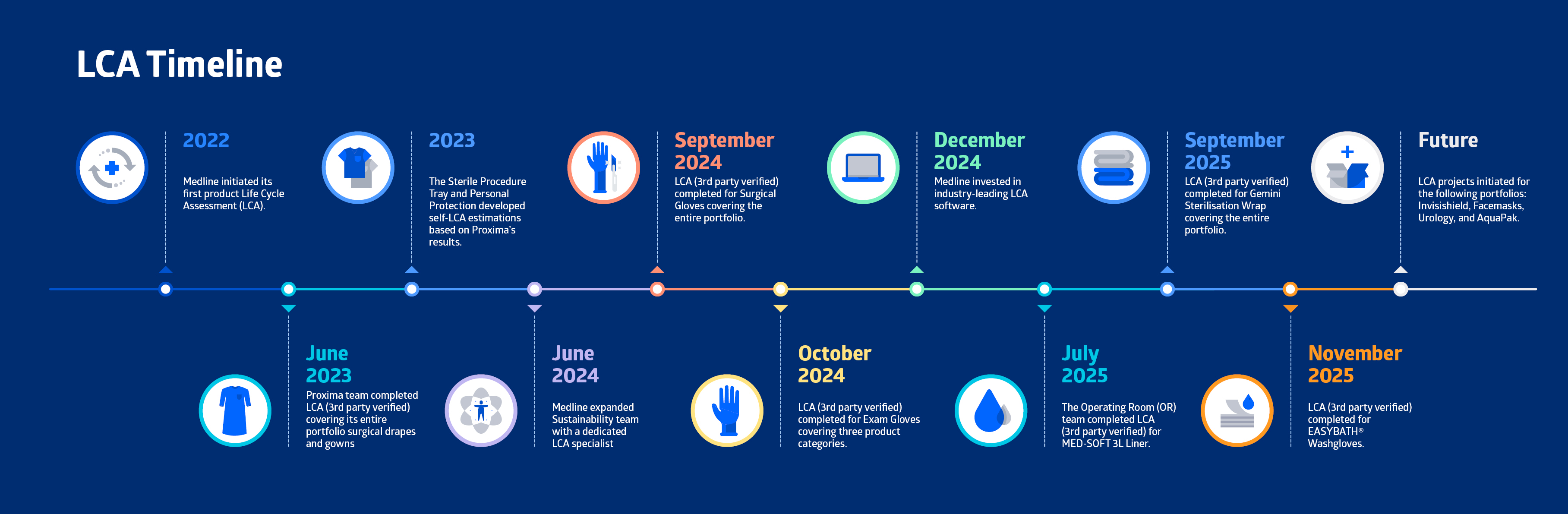
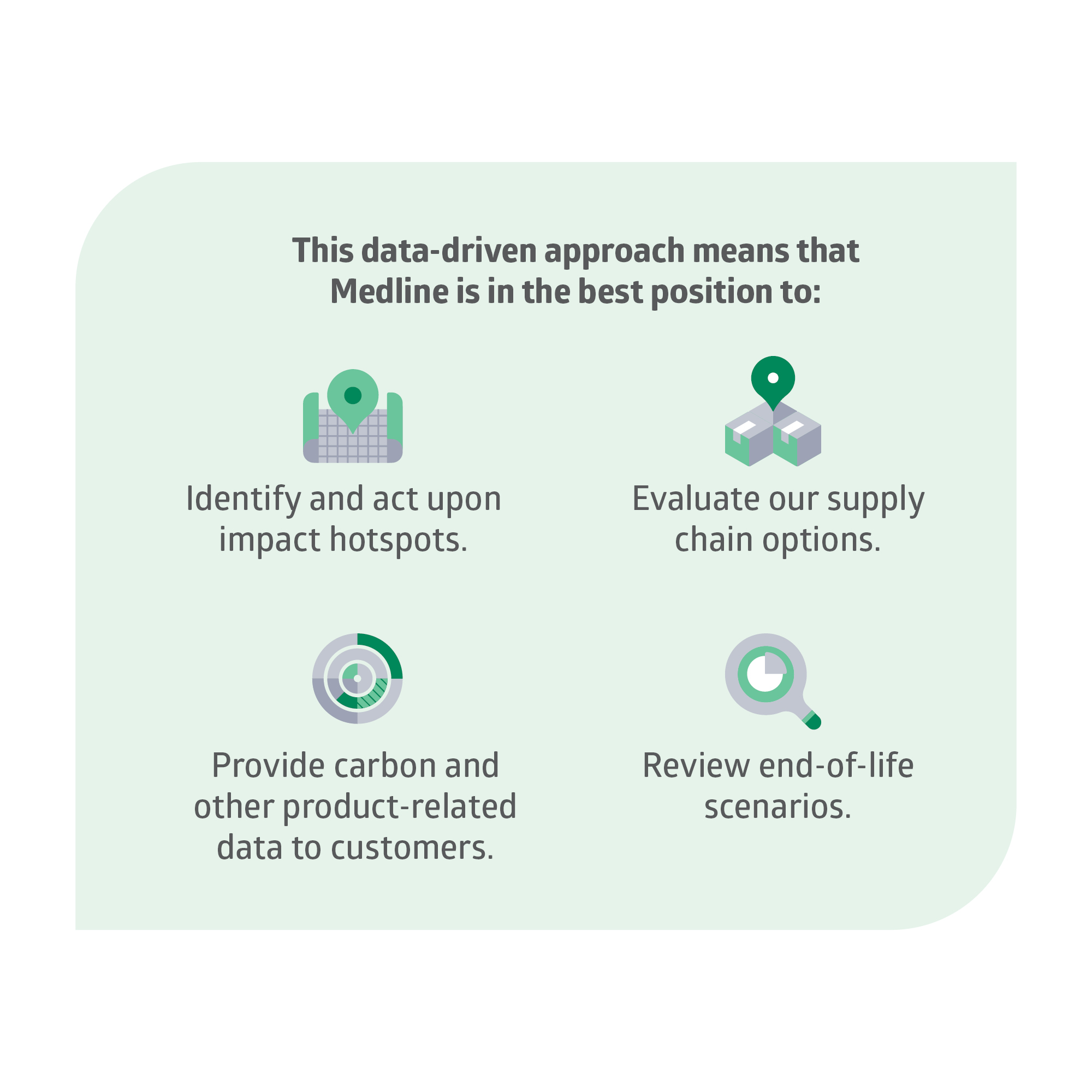
To support this need, Medline has expanded its LCA programme across Europe, completing assessments for a growing number of product categories. These studies help identify environmental hotspots throughout the value chain and provide a more detailed understanding of the activities contributing to a product's carbon footprint.


The findings consistently demonstrate the importance of looking across the full product lifecycle. In many cases, raw material extraction and processing represent the largest contributors to overall environmental impact, highlighting the significant role that material selection and product design can play in reducing emissions.

Beyond supporting internal decision-making, LCAs and PCFs also enable Medline to provide customers with environmental information that can guide procurement discussions, sustainability initiatives, and corporate reporting requirements.


Scaling Environmental Data Across a Complex Portfolio


Developing robust LCAs and PCFs requires detailed data from across global supply chains, including information on materials, manufacturing processes, transportation routes, packaging, and end-of-life treatment. Collecting and validating this data is a complex process that requires close collaboration with suppliers and manufacturing partners.


To address this challenge, Medline is exploring approaches that build upon existing LCA results to expand environmental footprint coverage across additional products. By leveraging insights generated from completed assessments, we can provide customers with tailored carbon emission estimations based on their purchases of Medline portfolio.


This work also supports the ongoing development of Medline’s GHG inventory. Product-level environmental data can complement corporate emissions reporting, strengthen understanding of value-chain impacts, and provide additional support for customers seeking more complete Scope 3 emissions results.


Climate Action Through Better Data


International Day of Climate Action reminds us that effective action starts with understanding environmental impact. By investing in LCAs and PCFs, Medline is helping build the environmental database needed to support informed decision-making, greater transparency, and continuous improvement.


As expectations around GHG inventory reporting continue to evolve, product-level environmental insights will play an increasingly important role in helping healthcare organisations understand their emissions and identify opportunities for reduction. Through continued collaboration across the value chain, Medline aims to support customers with the science-based information needed to advance their sustainability objectives while we continue to make healthcare run better.


About Medline


Medline is one of the largest providers of medical-surgical products and supply chain solutions, helping healthcare providers improve clinical, operational, and financial outcomes.


In EMEA, we partner with healthcare providers to deliver clinically focused products and services built on four foundations: tradition, proximity to clients, reliability, and sustainability. Together, these strengths help healthcare professionals focus on what matters most — caring for patients. To learn more about how Medline makes healthcare run better, visit We are Medline.