
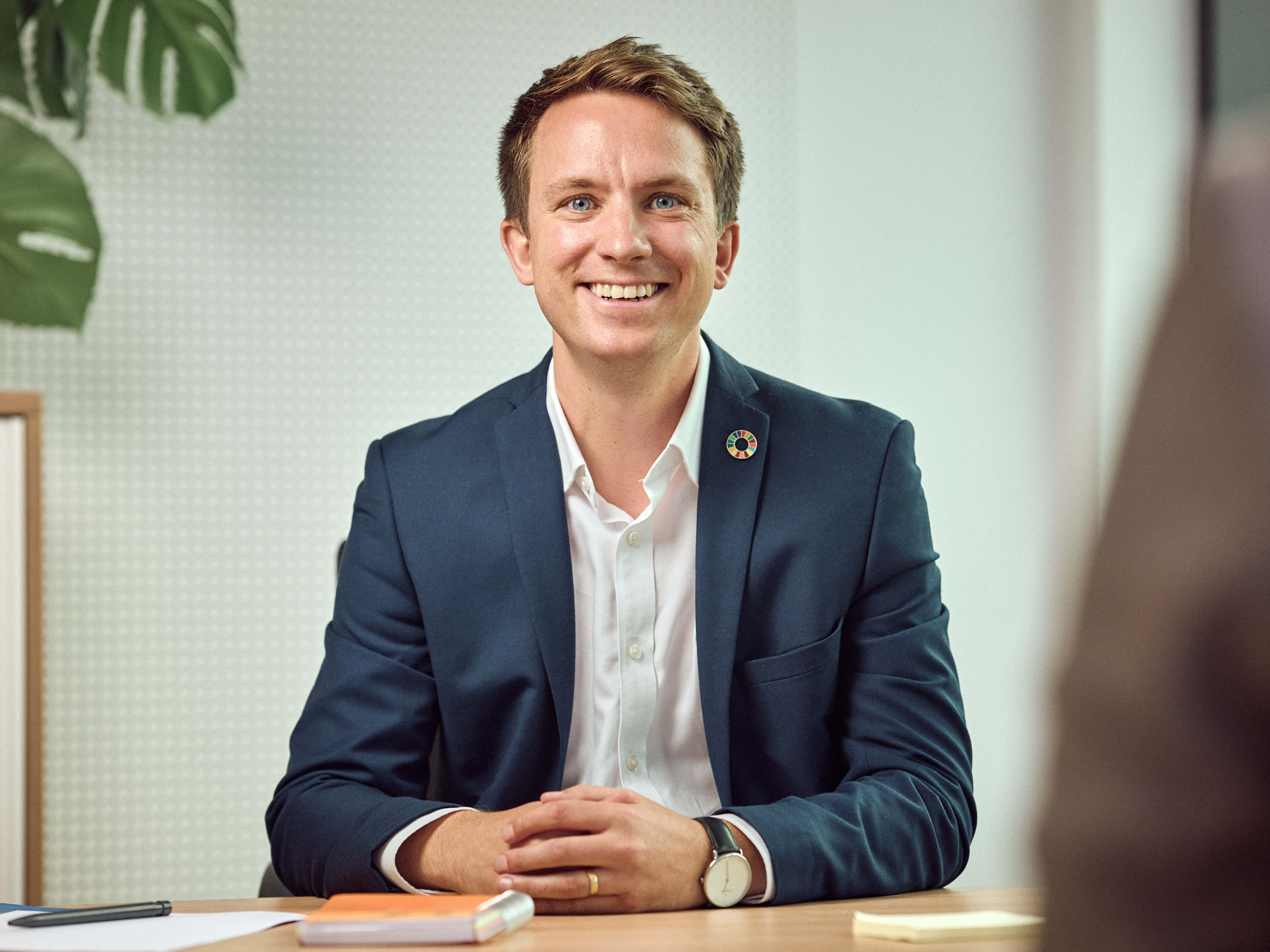
Meet Oliver Watts, Sustainability Director Medline EMEA

24 Nov
2026
Tell us a bit about yourself and your role at Medline.


I work on sustainability across Medline EMEA (Europe, the Middle East, and Africia). A large part of my role is about connecting our sustainability ambitions with the practical realities of healthcare. Before joining Medline, I spent around 10 years working in sustainability within the construction and real estate sector, helping organisations improve the environmental performance of buildings and infrastructure. The opportunity to bring that experience into healthcare was a key reason for joining Medline, as I was excited by the challenge of supporting the delivery of healthcare in a more sustainable way while maintaining the high standards that patients and clinicians depend on.


Healthcare is a particularly interesting environment because environmental considerations sit alongside critically important factors like patient safety, as well as efficiency and cost. You cannot really look at one in isolation of the others. My role involves working with colleagues across Medline and with healthcare providers to explore where practical improvements may be possible. That can mean looking at products and materials, packaging, transportation and waste, but also at the way products are used within a clinical setting. What I find particularly interesting is taking something which can sometimes feel like a very broad topic and making it tangible. Sometimes relatively simple questions can lead to useful conversations:
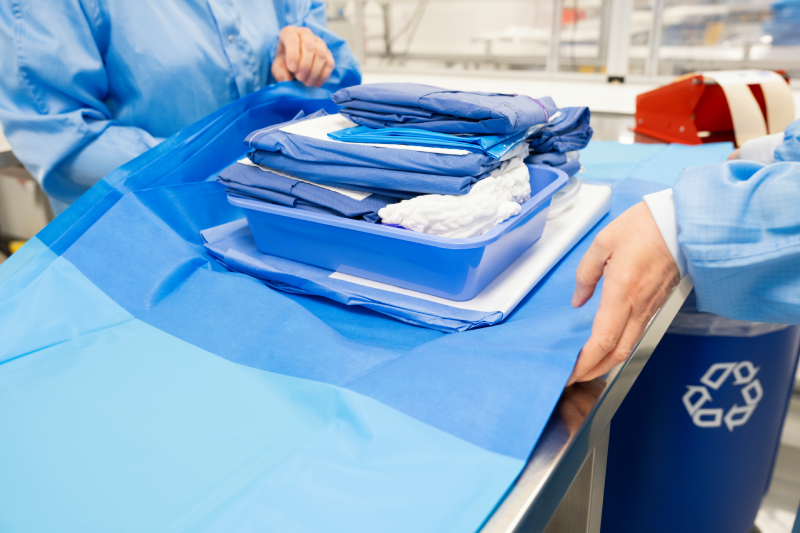
 

Do we need every component in this pack? Could we use a different material? Could we package or transport something differently?


For me, this is where sustainability becomes most relevant, when we move from ambition to practical actions, which make sense in a healthcare environment.


Sustainability is becoming an increasingly important topic across healthcare. How do you see it influencing the future of patient care and healthcare delivery?


I think sustainability will increasingly become part of a much broader conversation about how healthcare systems use resources. Healthcare organisations are dealing with multiple pressures at the same time, from growing demand for services and staff health and wellbeing, to the need for savings while also maintaining clinical efficacy and supply chain resilience of products. Alongside this, many are looking for ways to better understand and address their environmental impact. What is interesting is that these challenges are often connected. Reducing unnecessary materials, for example, can potentially mean less waste, but it may also simplify storage and handling.


Reviewing supply chains can help identify opportunities around transportation and resource use, and simplifying certain clinical workflows may help healthcare professionals spend less time on logistical activities. So, for me, sustainability should not be considered in isolation. The question is how we can use resources more thoughtfully while continuing to support the clinical and operational needs of healthcare providers. Patient care has to remain central to that conversation. The opportunity is to identify practical changes which can help healthcare organisations address environmental considerations while also supporting the way care is delivered.


How is Medline approaching sustainability, and what makes your approach different?


At Medline, we seek to integrate sustainability considerations into different parts of our business, from products and operations to the way we work with customers. Collaboration is an important part of that. Every healthcare environment is different, so rather than assuming there is one answer, we work with healthcare providers to understand their processes and explore where there may be opportunities for improvement. Our work with Sterile Procedure Trays (SPTs) is a good example. Medline teams conduct regular pack reviews with theatre teams, looking at the components included in a pack and discussing whether changes may be appropriate. This could include considering different component specifications or materials and their associated CO2e implications. Adding a component to a SPT can actually be the more sustainable option.


By incorporating items directly into the tray, hospitals may be able to avoid the additional packaging, transport, storage and handling associated with supplying those products separately.


I think there is a very simple principle behind this: look at what is actually needed for the procedure. If something is not required, or if an appropriate alternative can be considered, that opens a conversation about materials, packaging, waste and efficiency. These may seem like relatively small decisions, but they allow us to approach sustainability in a very practical way, together with the people who actually use these products.


Can you share examples where sustainable solutions have delivered measurable benefits in real healthcare settings?


The operating room is a good place to see how workflow changes can create opportunities to address several challenges at once. Before a procedure, teams may need to source, open and organise multiple individual sterile components. An SPT brings the required consumables for a specific procedure together in one customised, pre-assembled pack, which is designed to simplify preparation. Our data, supported by clinician insights, indicates that SPTs can contribute to saving approximately 10 minutes per procedure. The observations also showed reductions in time spent on activities such as sorting waste and opening supplementary consumables.


For me, the time element is particularly important. Time which is not spent sourcing, opening or organising products can potentially be used elsewhere in the clinical workflow, including for patient-related activities. The case study highlights opportunities for more patient interaction, monitoring and preparation. SPTs also give us an opportunity to look at the pack itself: what is included, what materials are being used and whether components could potentially be optimised. It is a good example of why sustainability and operational conversations often need to happen together.


Looking ahead, where do you see the greatest opportunities for sustainability innovation in healthcare over the next decade?


For me, one of the biggest opportunities is data. It is difficult to make informed decisions without understanding the impact associated with the choices we are making. That is why tools such as Life Cycle Assessments (LCAs) can be valuable. Medline conducts third-party verified LCAs for selected products, including drapes and gowns, which can provide healthcare professionals with information about the environmental impact associated with those products. However, I don't think the next decade will only be about finding new materials or developing new products.


There is also a significant opportunity to look at the way healthcare works: how products are ordered, transported, stored, prepared, used and managed after use. That is where solutions such as SPTs become particularly interesting. They encourage us to look beyond an individual product and consider the wider workflow. In addition, we are also exploring areas, such as recycling and circular economy models, for selected products.


In my view, some of the most interesting innovation may come not simply from adding something new, but from finding more thoughtful ways to use the resources already involved in healthcare delivery.


If you could have been present for any moment in medical history, which would it have been and why?


I would choose the development of IVF and the birth of the world's first baby conceived through IVF in the late 1970s. Of course, it was an extraordinary scientific breakthrough, but what makes it particularly meaningful to me is the human story behind it. IVF has created possibilities for families around the world that simply did not exist before. It also has a very personal connection for me because IVF forms part of my own family's story through my daughter. For this reason, I probably look at this particular medical breakthrough from a slightly different perspective.


We often talk about medical innovation in terms of science, technology and clinical outcomes. But, ultimately, behind all of those things are people and their lives. IVF is a powerful reminder of that. Medical progress is not only about treating illness or helping people live longer. Sometimes it creates an entirely new possibility for somebody that can fundamentally change the course of a family. Being present at the first successful birth and seeing what it meant to the scientists, clinicians and, most importantly, the family involved would have been amazing.


Disclaimer: Originally published in IPP Magazine by AfPP